CARA

Final Year Project
Project Overview
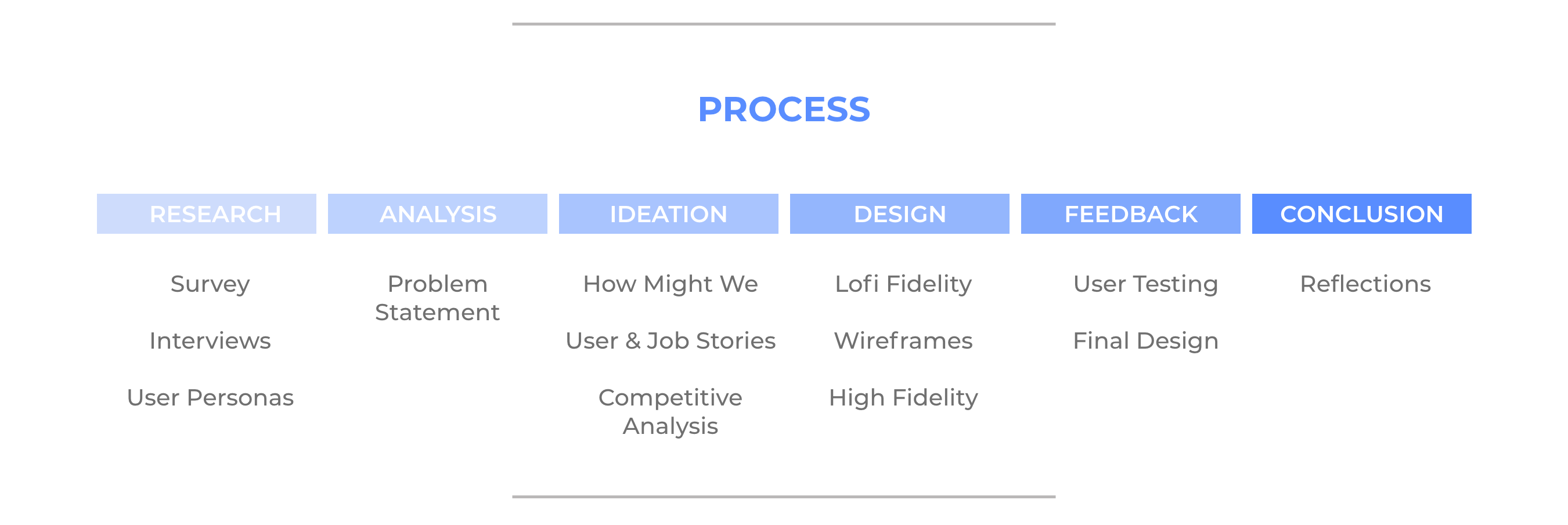
For my final year project I built a prototype for an AI chatbot that promotes the daily management of ones mental health. The prototype was built with adobe xd and sketch app, while the research and development took place throughout two semesters of my final year of university.
This case study looks at the project throughout the year and the processes involved to get it from start to finish. New reports from the Royal College of Surgeons in Ireland showed that 1 in 5 young Irish adults aged between 19 and 24 suffered from mental health issues and another study showing the same rate in people over the age of 55. There is a distinct problem with mental health in Ireland, I wanted to try build a tool that could aid anyone struggling to try better themselves.

Introduction


Further down the project timeline then I would focus in on a specific topic. I would begin with using a survey, interviews and user personas as tool to discover such insights. The research phase was extremely important to me as I realise how sensitive mental health topics can be and I needed to fully be able to empathise with the user.


One of the main aims for my final year project was to apply design thinking to mental health. I want to understand through a holistic approach how mental health services in Ireland work and why is there such a high rate of mental health disorders in our country, with an aim to finding problems in the process and help generate ideas to improve upon this. At the start of the project I decided to keep my research area as broad as possible within mental health to try gain as many insights as I could.


Research

The Survey
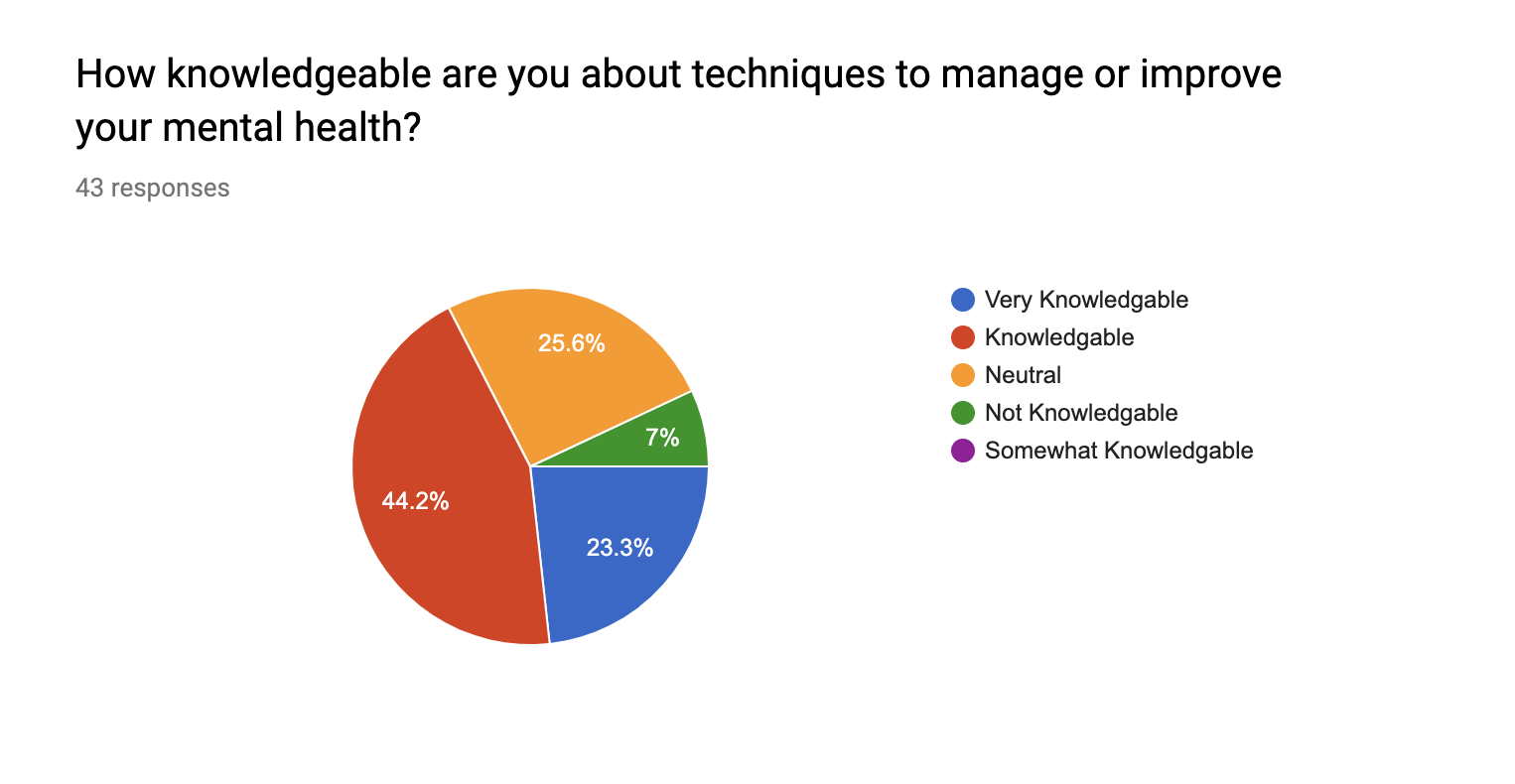
For the quantitative part of my research I decided in order to gather as much user information as possible the best option would be to send out a survey. It would allow me to reach a significantly large audience.  The survey would help give an insight in how young people of Ireland go about managing their own mental health and the attitudes they have towards it. It consisted of 18 questions varying from yes/no to rating an answer on a scale and opened ended questions. I got a total of 43 responses.
The Interviews
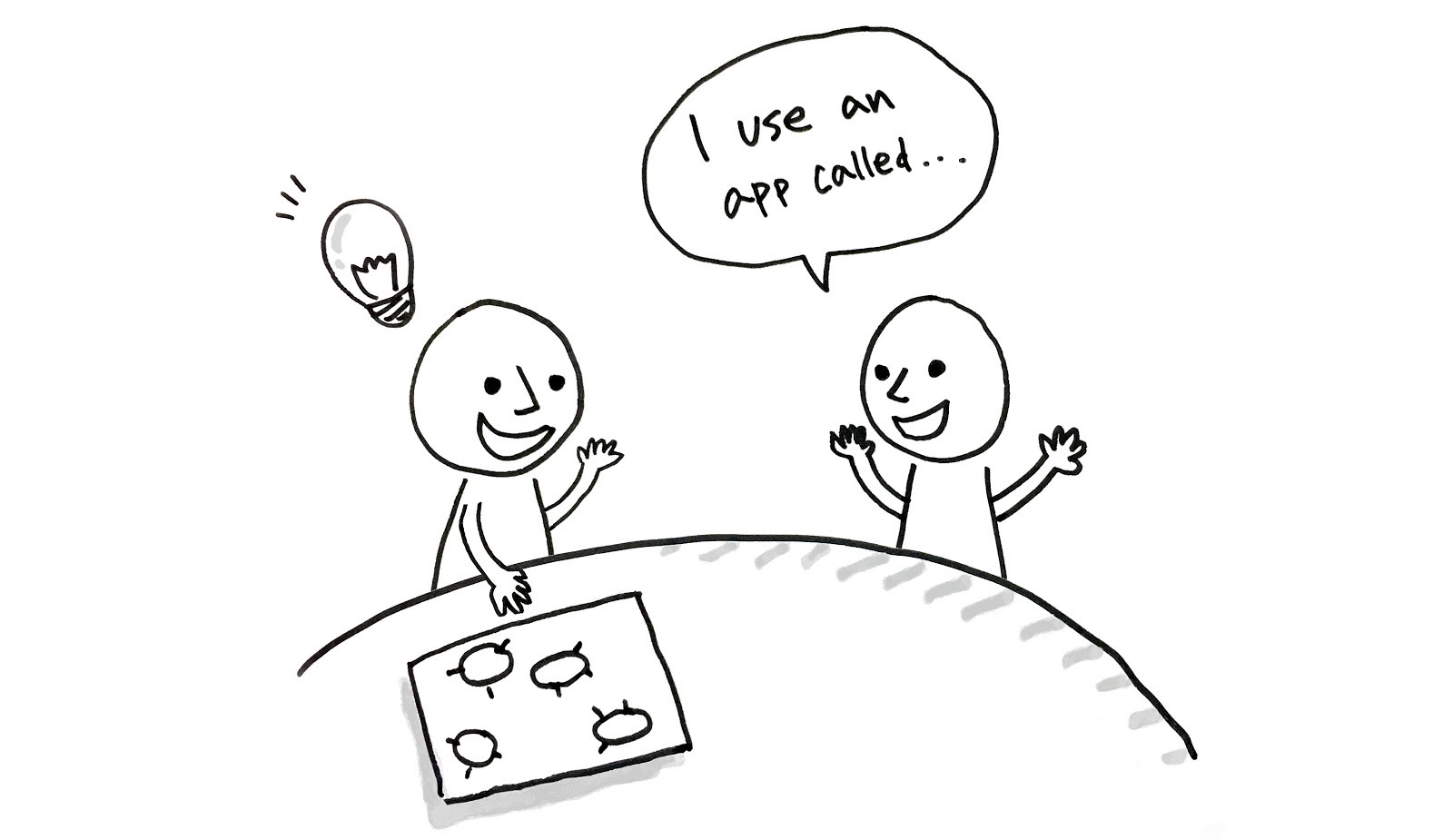
For this project I interviewed individuals aged 18 to 25 around the Limerick area. I used these interviews to gain an understanding on the internal struggles young people in Ireland suffer from. The most common mental health issues that kept showing up were stress, anxiety and depression.
User Personas
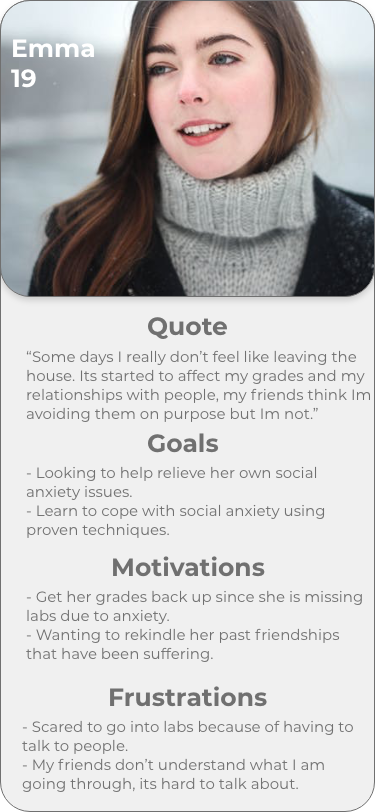
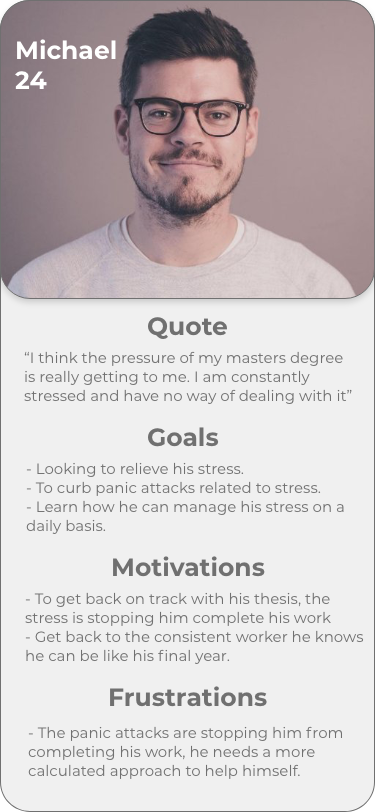
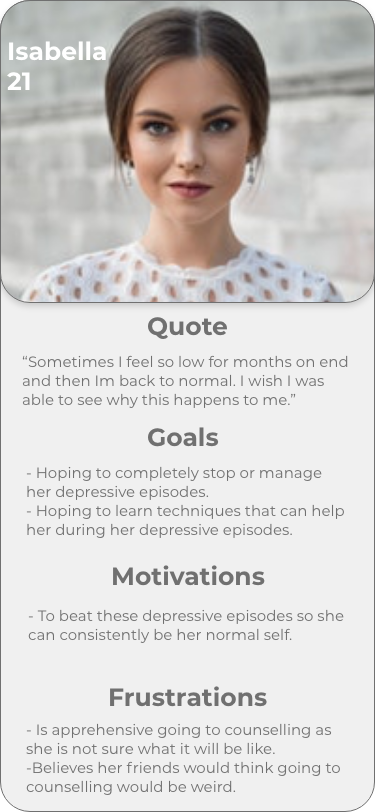
I used personas to help bring together information about groups of users or a set of users. The idea was to have a persona identify with a scenario that shows their needs, frustrations and goals. These can help as a designer come up with solutions to issues a group of users might be facing.


The main goal of these personas was to put myself in the user’s shoes and keep their needs at the forefront of our design when I got to that stage of development.


THE PROBLEM

As a designer I believe it is extremely important to define the problem you are trying to solve as early as you can. This allows me to solve thoroughly and effectively as I know what I am trying to tackle. The problem I defined is stated below.

"Mental health services in Ireland are not always accessible or good enough, how do I manage my own mental health and try to improve it over time."

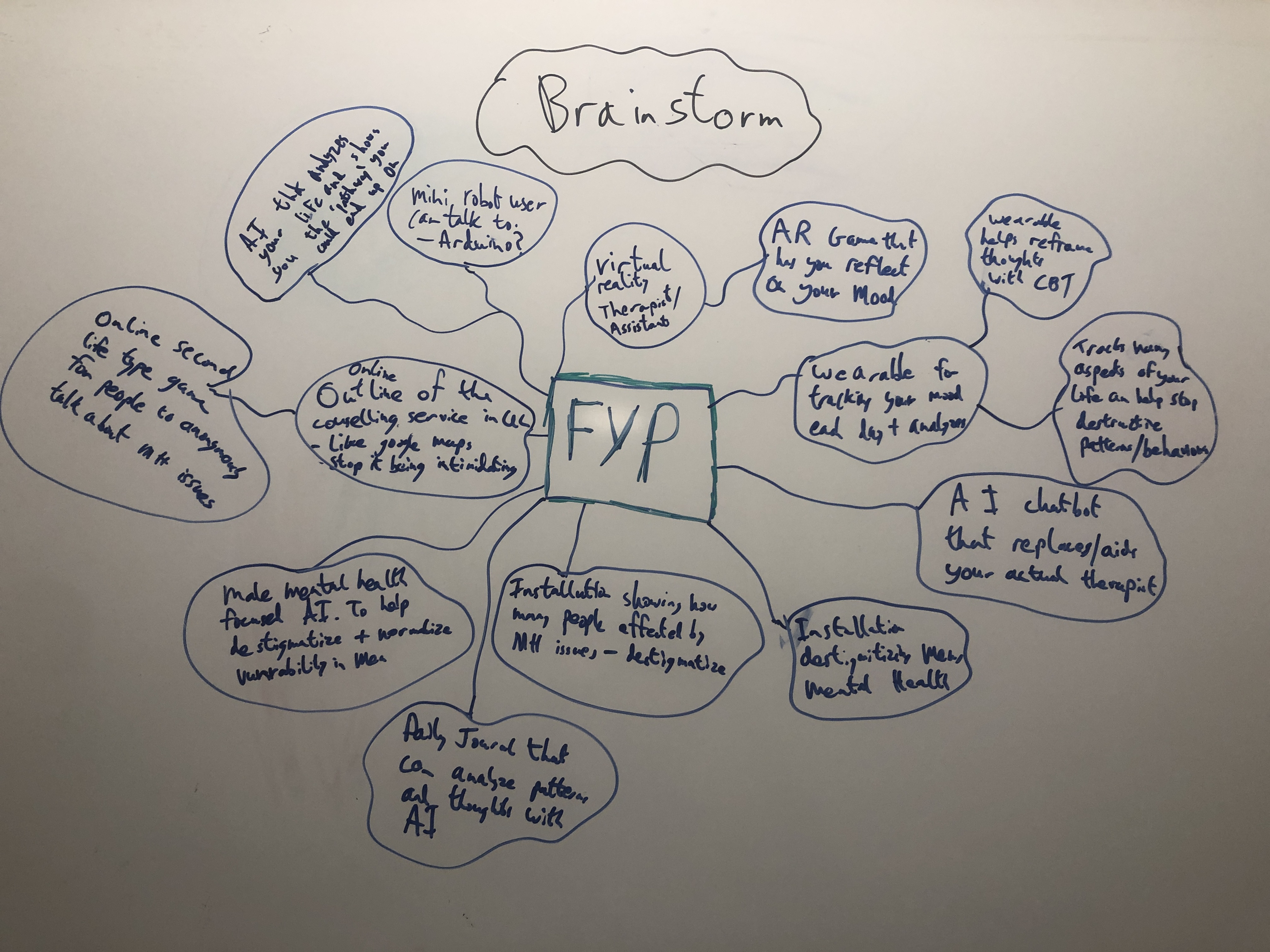
Following my defining of the problem from the research I analysed all of my data and moved onto the design phase. Here I used a few different techniques based on the data I gathered to brainstorm potential solutions to the users problems.
How Might We


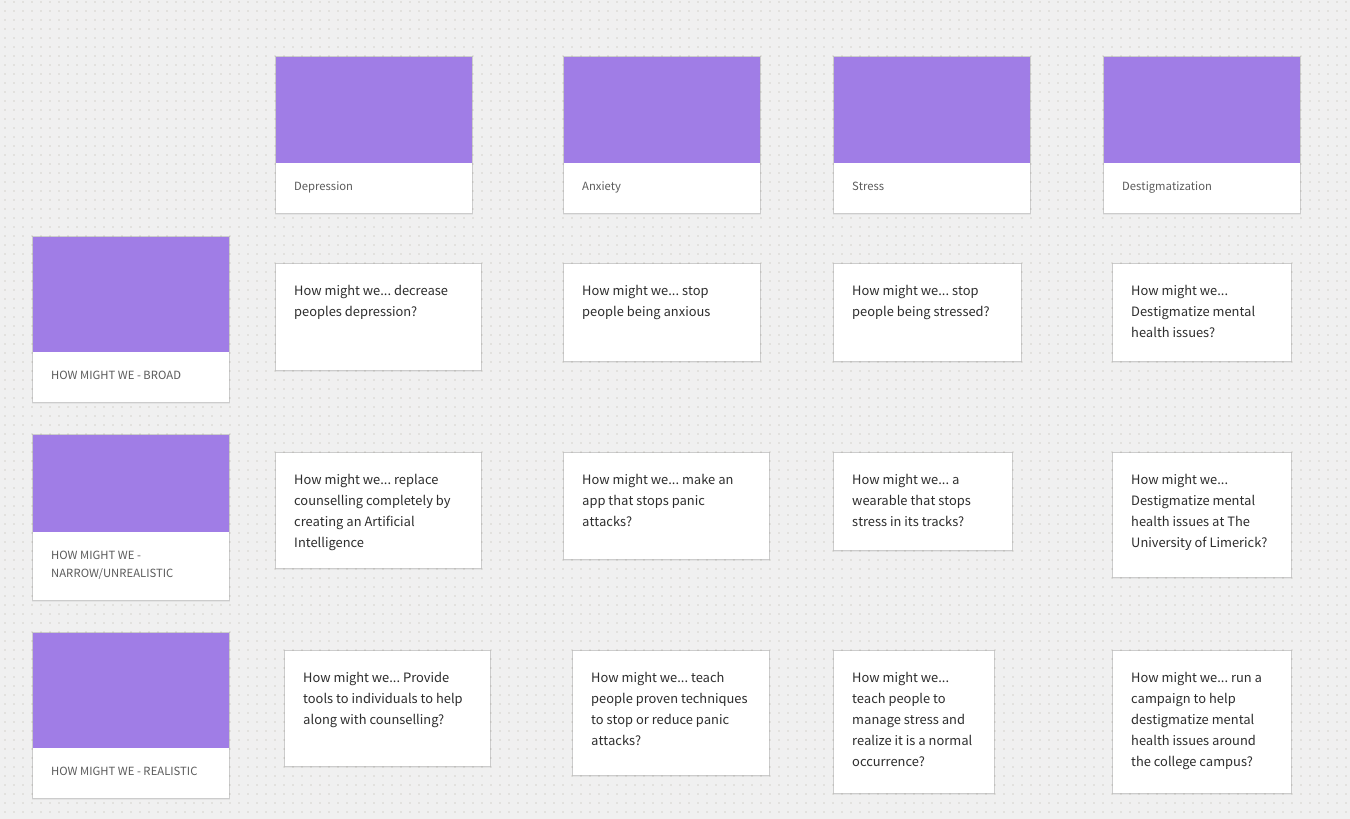
After my initial brainstorm I used the How Might we Technique to help me generate realistic ideas that could be part of my end product. The four key areas I focused on were depression, anxiety, stress and destigmatization. I started off with being as broad as possible with how might we solve ‘x’ problem. Moving into either a very narrow or unrealistic idea to finally a realistic idea. These phases of the ideation process helped me to think up of as many possibilities to solving the users problems and pain points. I can then pick and choose ideas from each post it to come up with the final solution.
Depending on desktop size some images may appear pixelated. Please right click and open in a new tab to view
User and Job Stories
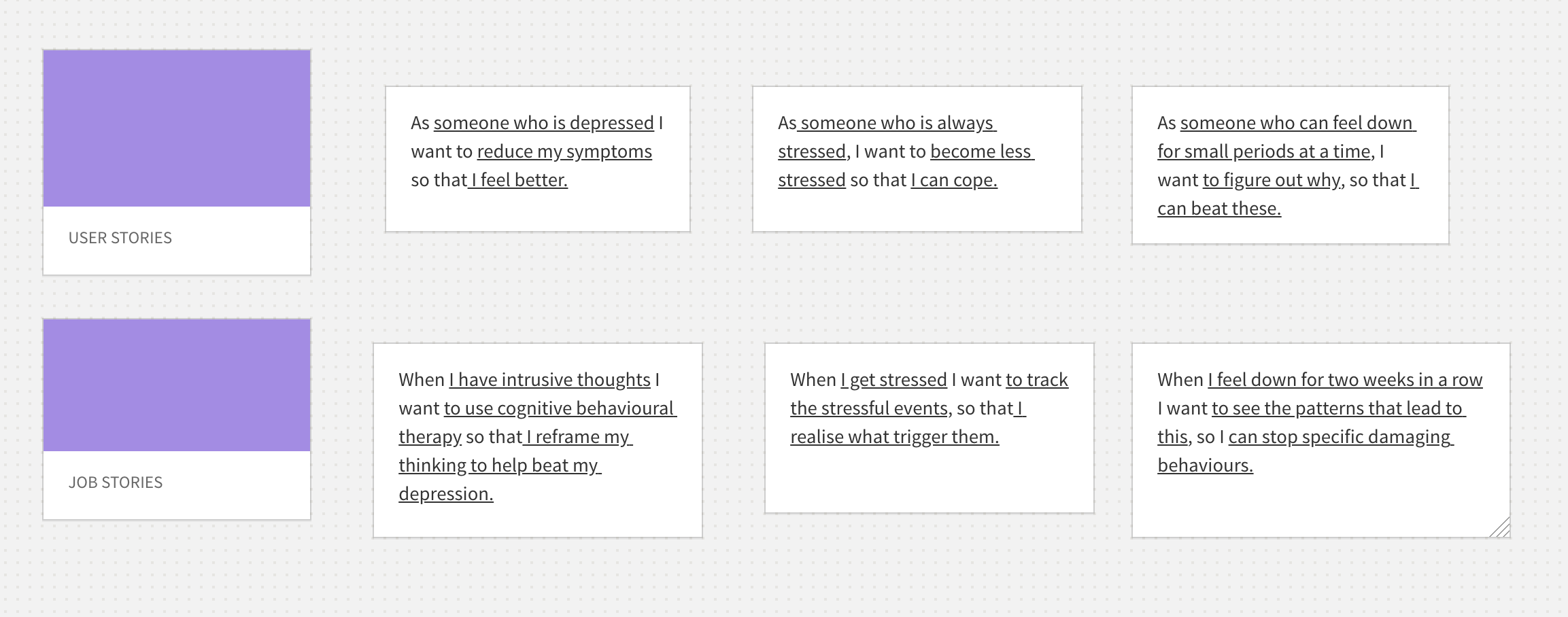
By this stage I am starting to narrow in on some potential areas to go towards. There are topics that start to come up time and time again. Using the user stories technique I try to get into the mind of the potential user and to see where they are coming from and what exact ideas could be used with job stories.


THE SOLUTION

After my brainstorm and Ideation phase I start to narrow in on the ideas I want to work on. The one standing out to me most is the artificial intelligence chatbot. I believed this would be the most beneficial to the users in solving their problems. The artificial intelligence chatbot would be broad enough to help the three main mental health issues that keep cropping from my user research up with depression, anxiety and stress.

The basic premise of the artificial intelligence chatbot would be that it would allow the user to chat to the AI about managing their mental health on an ongoing basis and learn how to cope with clinically proven techniques. The three main techniques are the burns depression checklist used to quantify the users levels of depression and track it, a stress journal to identify your stressors everyday and finally CBT to help provide a therapy to teach the user to restructure their harmful thoughts. Then once a certain amount of data is gathered the artificial intelligence could anaylze the data and give feedback and pointers about the users behaviours. These features were chosen after heavy research through reading peer reviewed papers.

I went to look and see what type of similar applications were out on the market and to try and see how effective they were. Would I be able to bring something unique to the table? I downloaded the main competitors to try test them myself and then completed a competitive analysis.

Prototyping

Low Fidelity
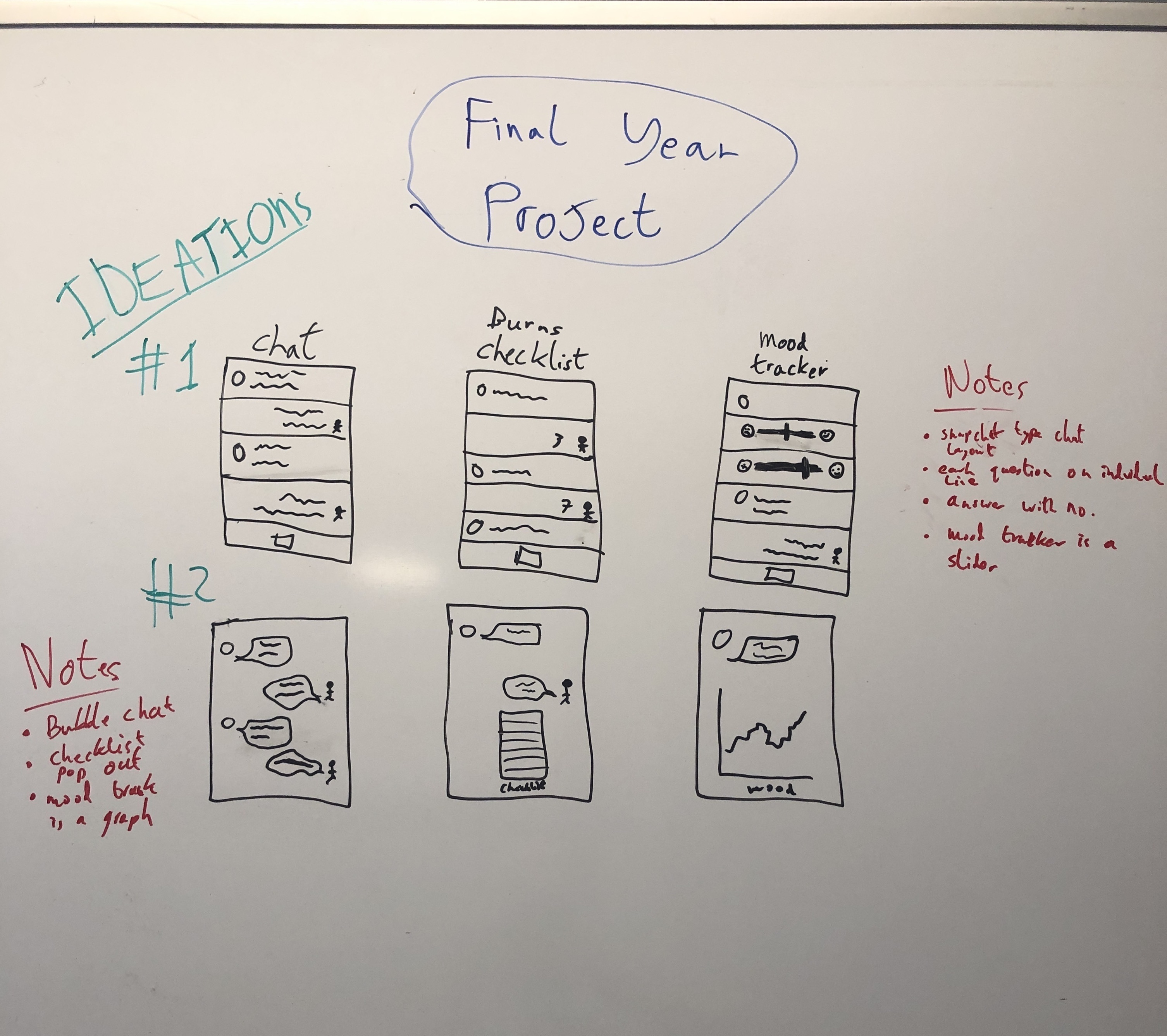
After nailing down the core features of the app I went to the design phases which I would test with users throughout. Starting with low fidelity sketches, I tried to sketch as many different types of flows for each component as I could to be able to test different ideas out.

I used a technique called the five second test to help get initial feedback on these designs before diving further into a specific design. The Five second tests are a method of user research that help you measure what information users take away and what impression they get within the first five seconds of viewing a design.
Wireframes
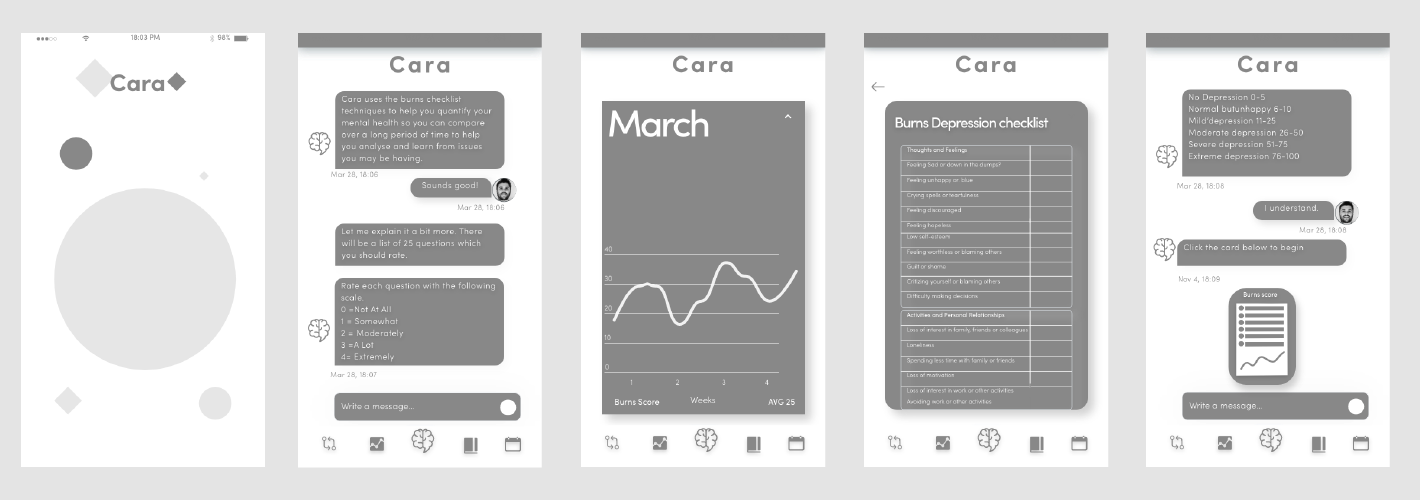
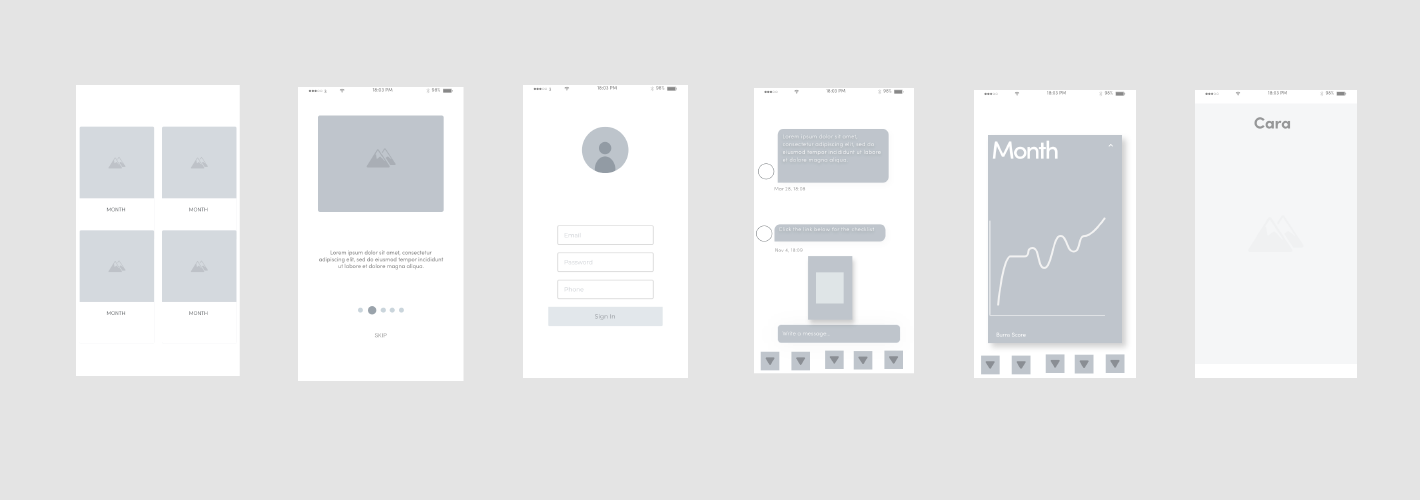
Having tested the paper prototype I moved towards the digital sphere and built out the bare bones of the app with sketch app. Building a wireframe of two more variations of the screens to test and see how the flow works. I used another test called the hallway test where I asked my house mates or colleagues in my course to test screens. The idea is that you can go out and grab random individuals passing by an office in a hallway and get them to test a product being developed, hence the name "hallway testing".
High Fidelity
I moved towards the final designs now with my high fidelity prototype. The designs had more detail and I had started to wire up the functionality and interactions within Adobe XDs prototype page.
Testing
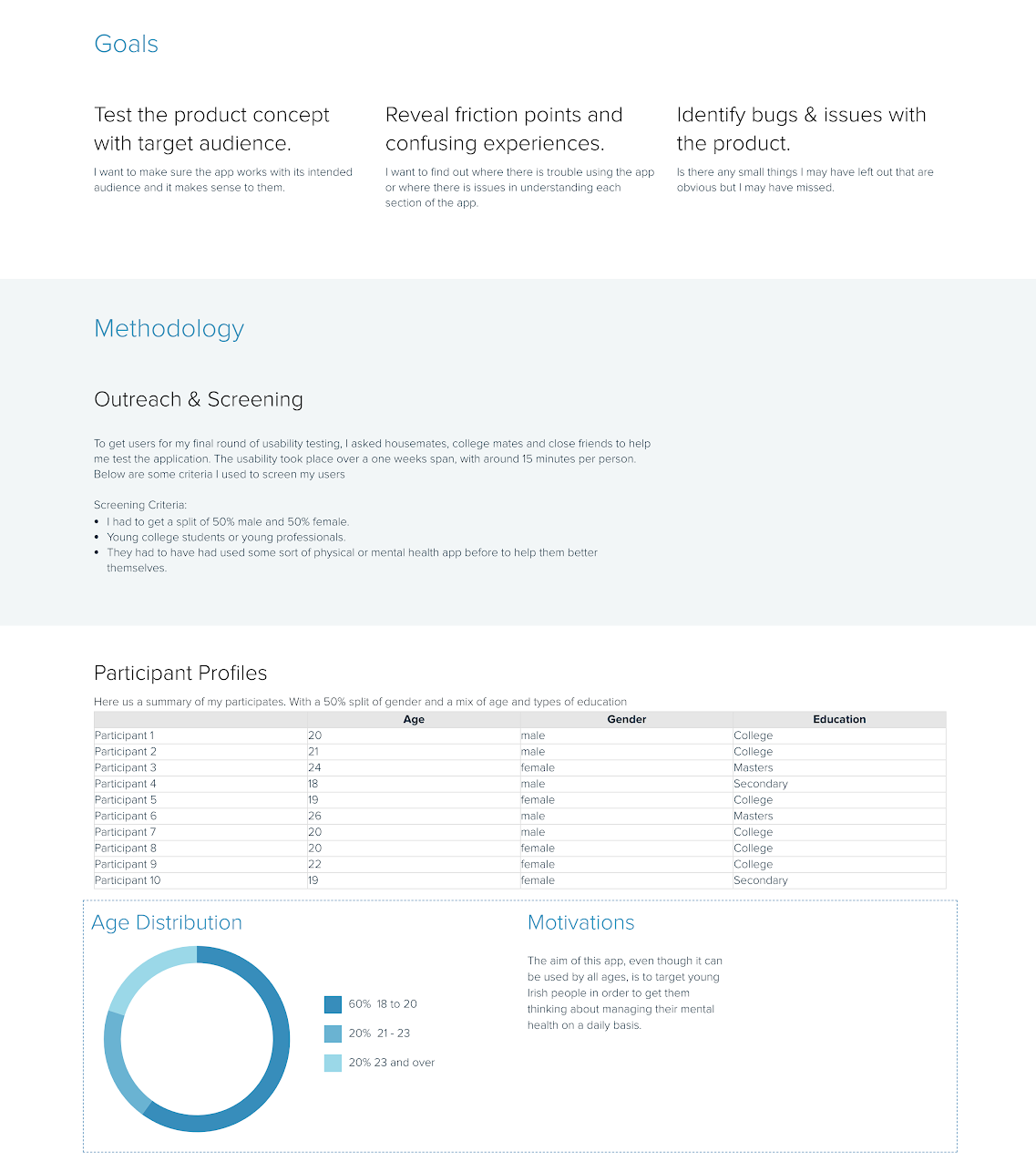
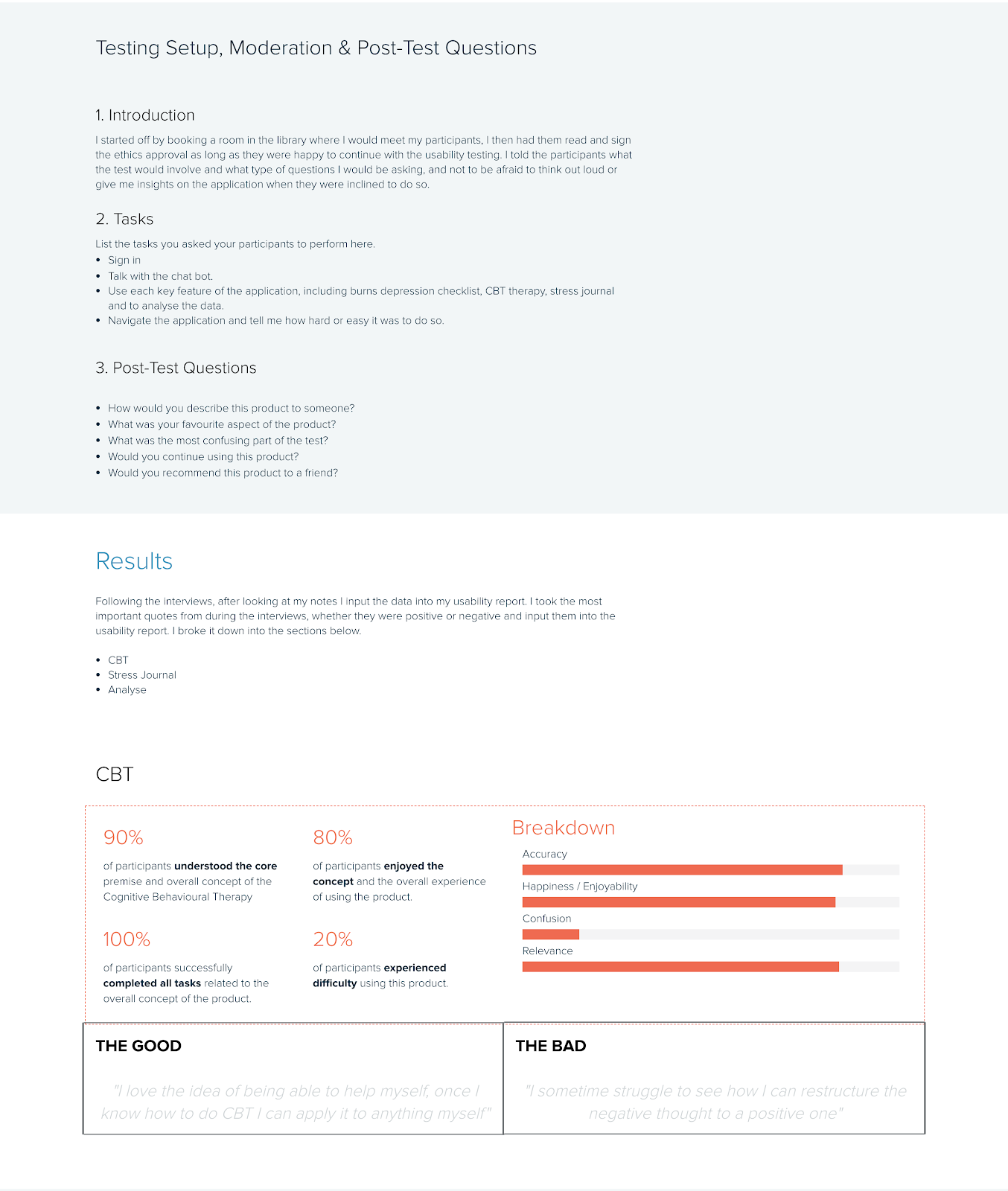
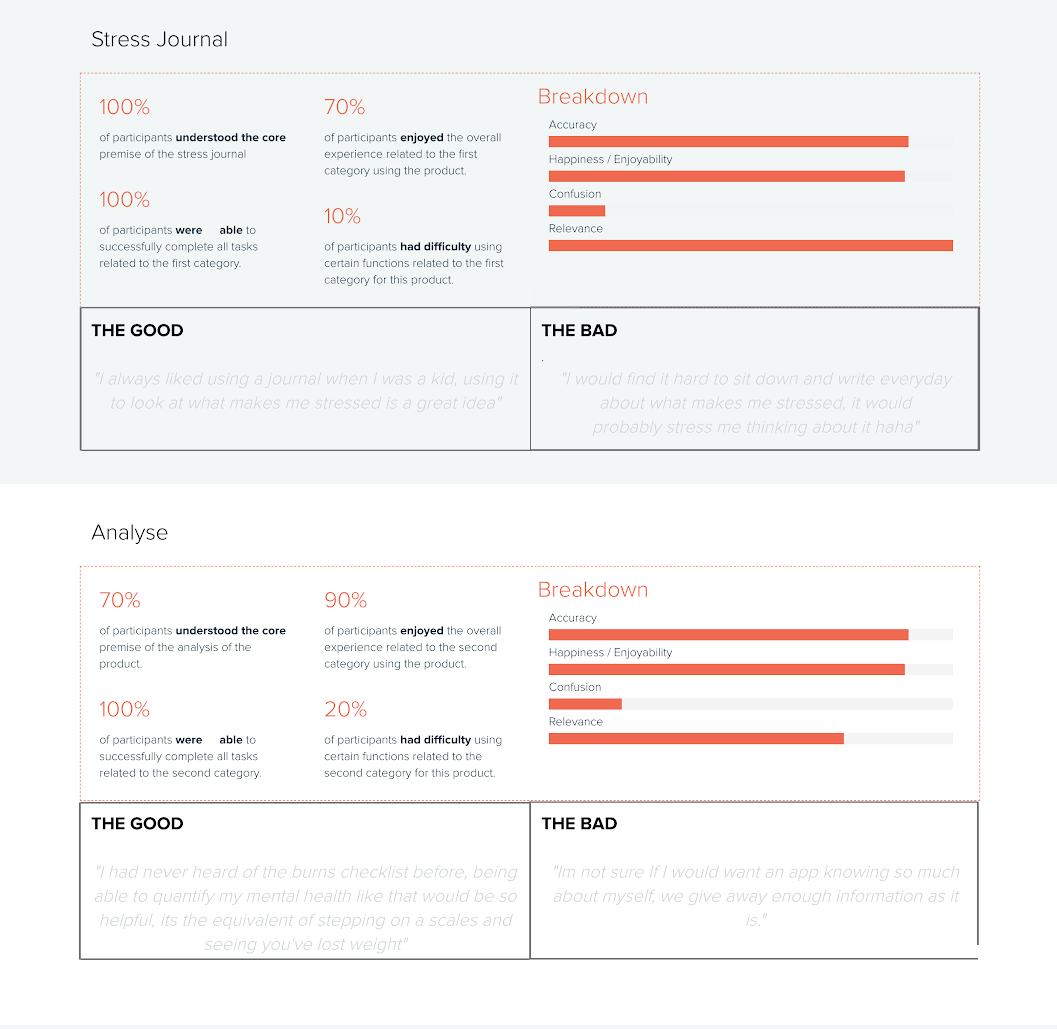
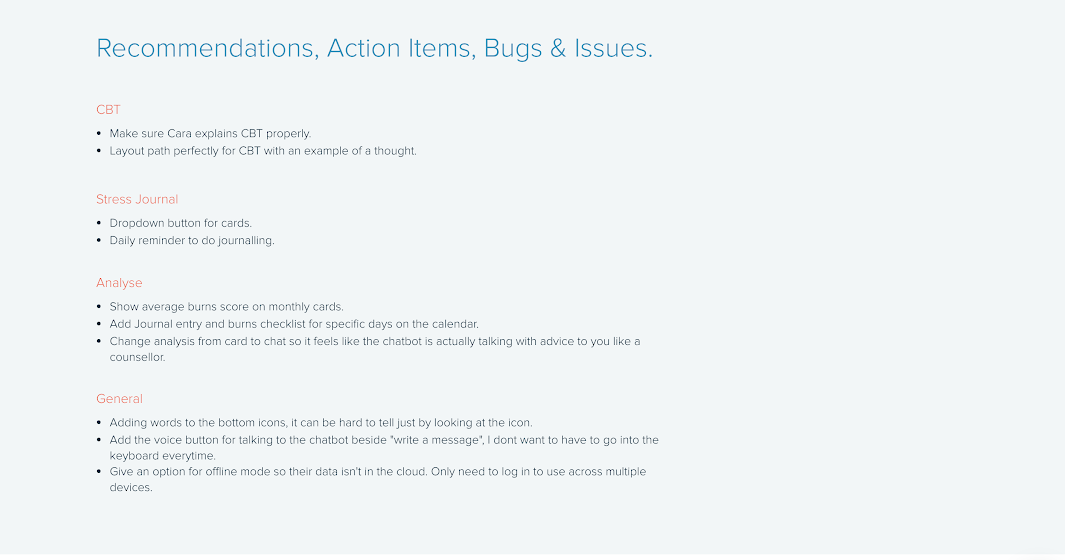
Having conducted usability testing through out with hallway testing and the five second test I moved onto my final round of usability testing. I interviewed ten participants aged between 18 to 26 with a 50/50 gender split and asked them to use the app while answering some questions given to them. After the analysis of the data the main take aways were then implemented into the app and can be seen below.
Interactions
Below are some key features in the app along with a short interaction animation from the user.

The interaction shown here is the analysis page. It is when the chat bot analyses data it has gathered input by the user and outputs what it believes is affecting the users mental health so they can stop such behaviours.


The above animation shows the cognitive restructuring technique which is where the user can input a destructive thought they may have had and try to reframe the problem to maybe realise it wasnt as problematic as they had previously thought.


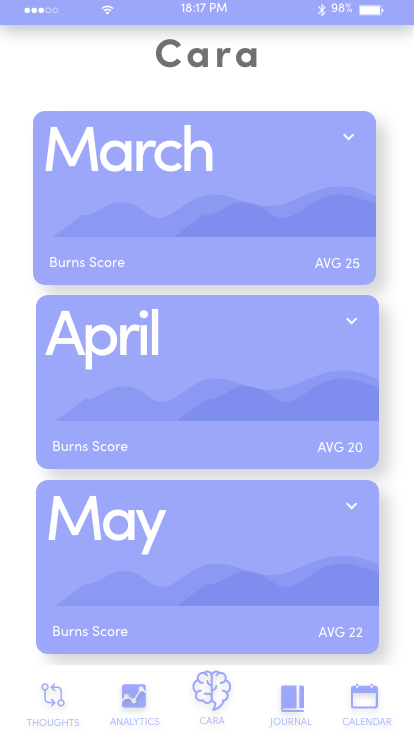
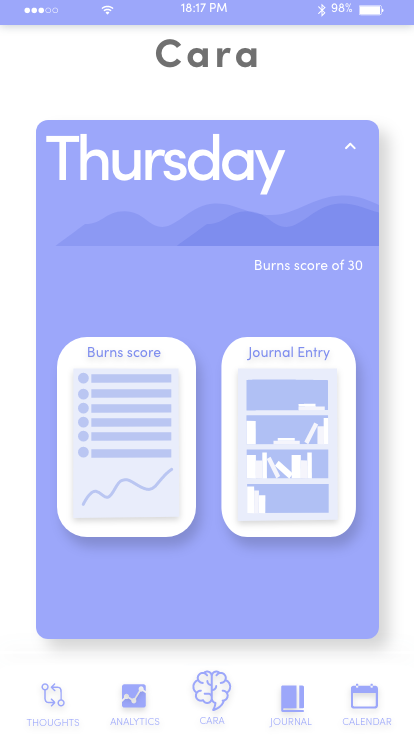
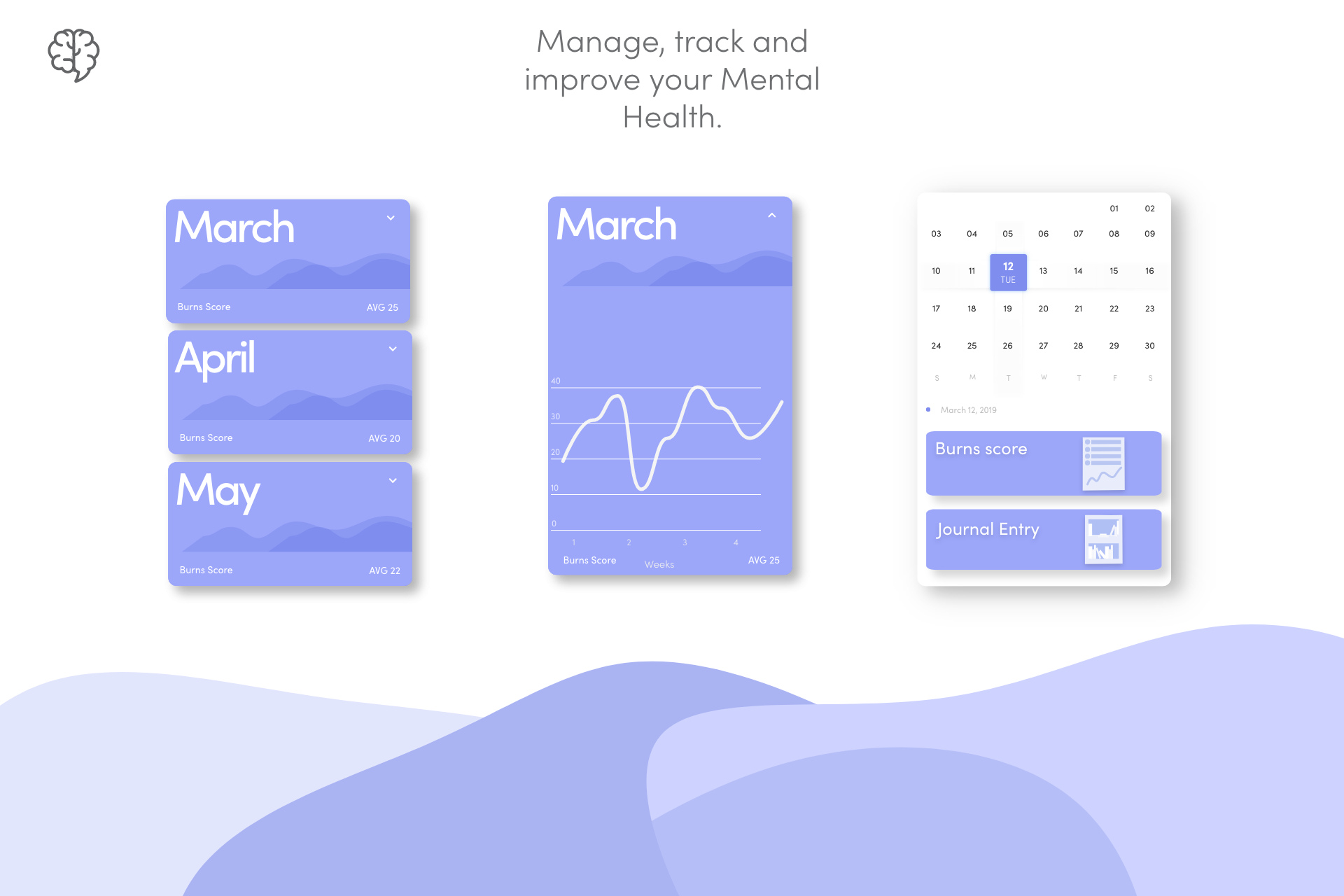
The final interaction shown here is the calendar where the user can look back at different journal entries or burns scores they had previously input. The burns depression score is based off the burns depression checklist which is a series of questions asked with a varying number added as an answer. The score is then added up and used as a guideline level of how a depressed a person can be. This is used in therapy by professionals but the main reasoned I added this to the app was to allow the user to quantify their depression and see with data, if their depression was increasing or decreasing over time.


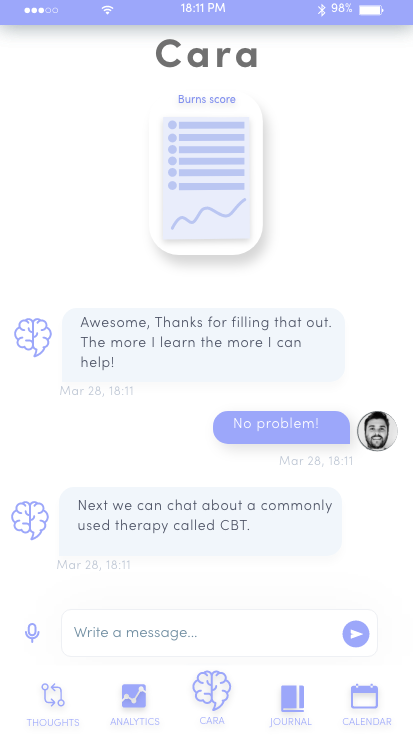
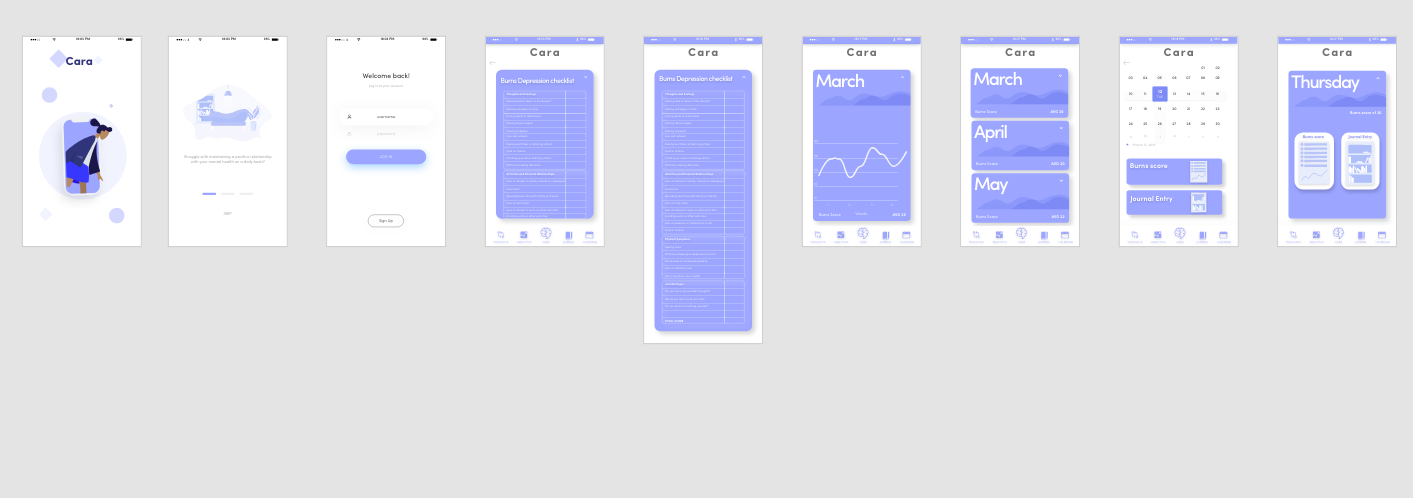
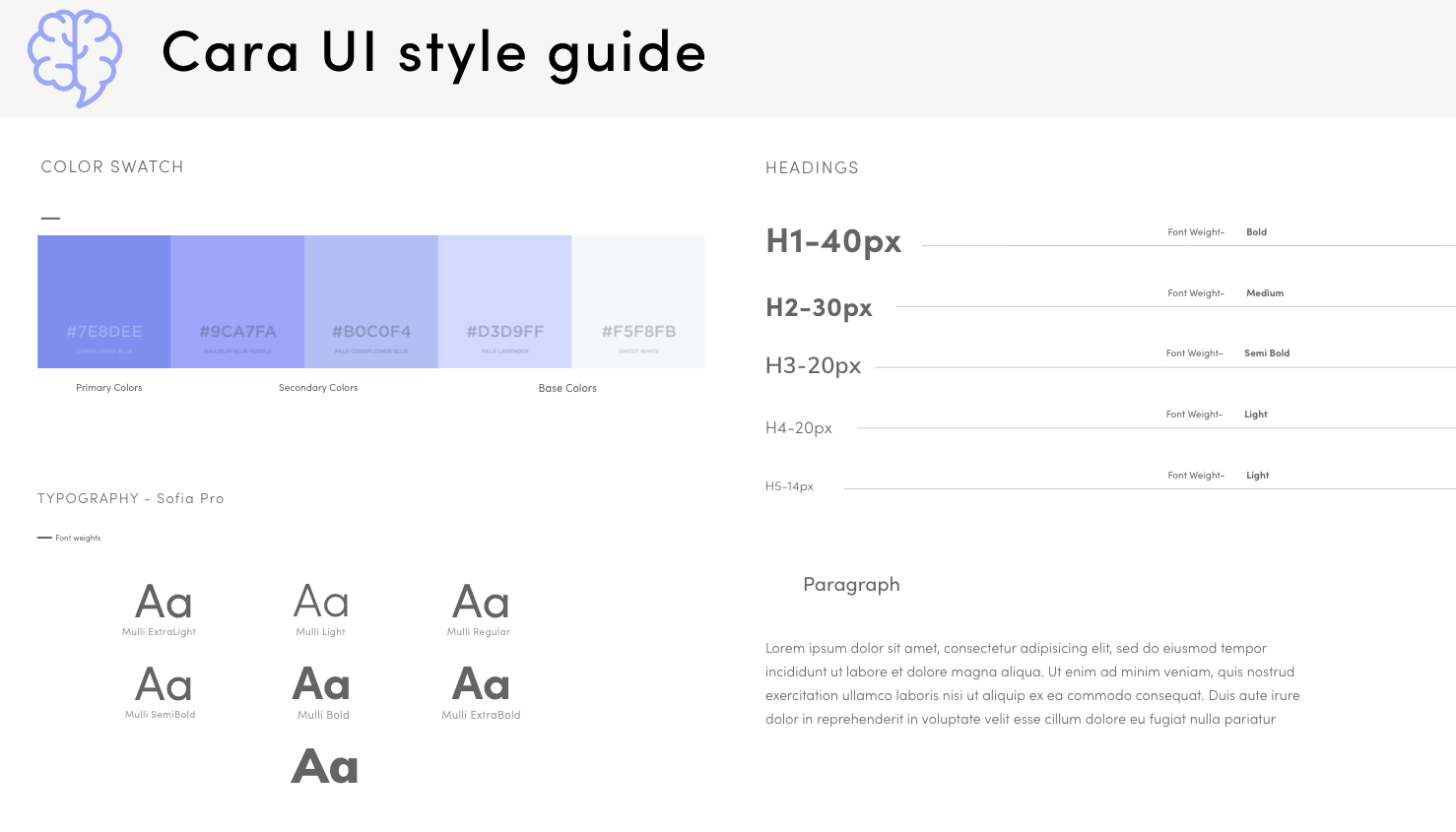
Below are some additional screens within the final prototype along with a style guide for the entire app.


The final prototype of my final year project can be found below to use. It shows you a complete run through of how the app would work if it was fully functional.


Reflections

The main aim of my final year project was to try and build a tool that could enable todays youth into taking their mental health into their own hands. It is no secret that the services in Ireland are not adequate enough and Irelands high mental health issues figures show this. I used all of the skills I had learned in my four years here at the University of Limerick and also the knowledge I brought back from co-operative placement to try build a prototype that could help people. Overall this year long project taught me the importance of iterative design and to always use informed design decisions. It helped me realise to emphasis the user as the focal point of the product.